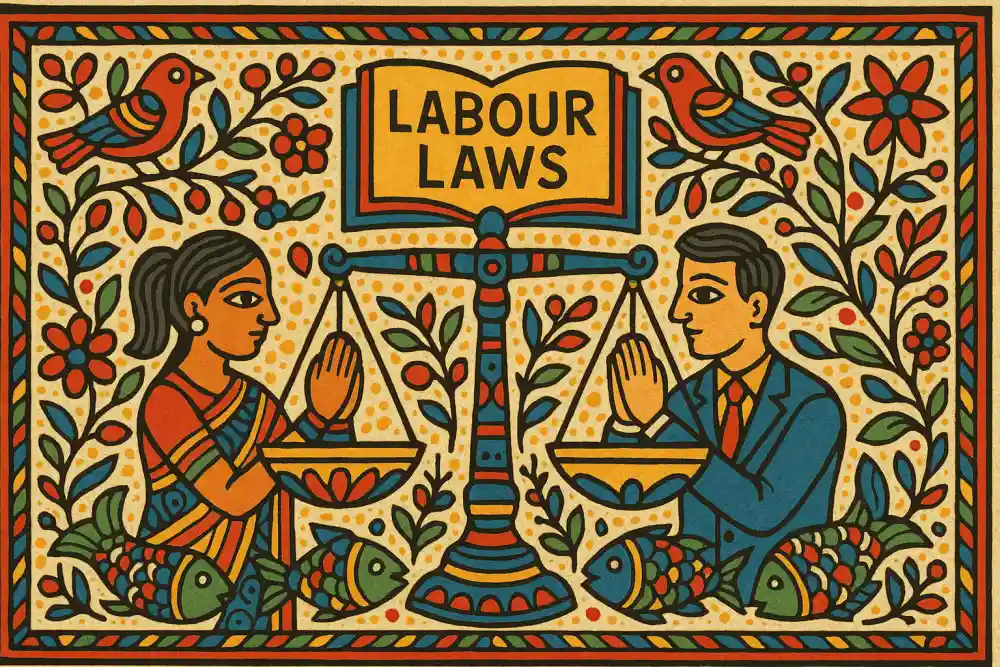
Labour Laws in India: An Overview
Labour Laws in India: An Overview
Labour laws in India serve as the cornerstone for protecting workers’ rights, ensuring fair treatment, and maintaining harmonious industrial relations. With a diverse workforce spanning various sectors, these laws provide a robust framework to address employment conditions, wages, safety, and social security.
This blog provides an overview of key labour laws in India, their significance, and the recent reforms introduced to modernize the legal framework.
Key Objectives of Labour Laws
-
Protection of Workers’ Rights:
- Safeguard workers from exploitation and ensure humane working conditions.
-
Promotion of Fair Wages:
- Establish standards for minimum wages and prevent wage discrimination.
-
Social Security:
- Provide benefits such as pensions, gratuity, maternity leave, and insurance.
-
Industrial Harmony:
- Foster peaceful relations between employers and employees through dispute resolution mechanisms.
-
Workplace Safety:
- Mandate safe working environments and protection against occupational hazards.
Major Labour Laws in India
India’s labour laws are broadly classified into four labour codes, consolidating multiple legislations to simplify and standardize labour regulations:
-
Code on Wages, 2019:
- Key Provisions:
- Sets a universal minimum wage for all workers, irrespective of employment type.
- Mandates timely payment of wages.
- Objective: Ensure fair remuneration and address wage disparities.
- Key Provisions:
-
Industrial Relations Code, 2020:
- Key Provisions:
- Regulates trade unions and collective bargaining processes.
- Establishes mechanisms for dispute resolution, such as conciliation and arbitration.
- Objective: Promote industrial peace and protect workers’ rights to organize.
- Key Provisions:
-
Code on Social Security, 2020:
- Key Provisions:
- Extends social security benefits like provident fund, insurance, and gratuity to more workers, including those in the gig and unorganized sectors.
- Objective: Provide comprehensive social protection to workers.
- Key Provisions:
-
Occupational Safety, Health, and Working Conditions Code, 2020:
- Key Provisions:
- Mandates health and safety standards in workplaces.
- Regulates working hours, leave entitlements, and welfare facilities.
- Objective: Ensure workers’ physical and mental well-being.
- Key Provisions:
Significance of Labour Laws
-
Improved Living Standards:
- Labour laws ensure adequate wages, reasonable working hours, and access to benefits, improving workers’ quality of life.
-
Economic Stability:
- By fostering fair practices and industrial harmony, labour laws contribute to economic growth and productivity.
-
Legal Protection:
- Workers have a legal recourse against unfair dismissal, discrimination, or unsafe work conditions.
-
Encouragement of Formal Employment:
- Simplified compliance under the labour codes incentivizes businesses to formalize employment.
Challenges in Implementation
-
Complex Compliance:
- Despite consolidation, small and medium enterprises (SMEs) often struggle with compliance requirements.
-
Informal Sector Workers:
- A large proportion of India’s workforce is in the informal sector, where implementation of labour laws remains weak.
-
Awareness Gaps:
- Many workers are unaware of their rights under labour laws, limiting their ability to claim entitlements.
-
Enforcement Issues:
- Lack of adequate resources and manpower affects the enforcement of labour regulations.
Recent Reforms and Developments
-
Simplification of Labour Laws:
- The consolidation of 29 central laws into four labour codes aims to reduce complexity and improve ease of compliance.
-
Social Security for Gig Workers:
- The inclusion of gig and platform workers under the Code on Social Security, 2020, is a significant step toward inclusivity.
-
Digital Platforms for Compliance:
- Initiatives like the Shram Suvidha Portal provide a unified platform for registration and compliance.
-
Maternity Benefits Expansion:
- The amendment to the Maternity Benefit Act, 1961, increased paid maternity leave to 26 weeks.
The Way Forward
To further enhance the effectiveness of labour laws in India, the following steps are crucial:
-
Awareness Campaigns:
- Educating workers about their rights and entitlements under labour laws.
-
Strengthening Enforcement:
- Equipping labour inspectors and authorities with resources to ensure compliance.
-
Focus on Informal Sector:
- Extending coverage of labour laws to the informal workforce through targeted schemes.
-
Technological Integration:
- Leveraging technology for grievance redressal, compliance monitoring, and worker registration.
Conclusion
Labour laws in India play a pivotal role in shaping a fair and equitable workplace environment. While significant strides have been made with recent reforms, consistent efforts are needed to address implementation challenges and extend protection to all workers, especially those in the informal sector.
By promoting awareness, strengthening enforcement, and embracing modernization, India can create a robust labour ecosystem that balances the interests of workers and employers, fostering sustainable economic growth.