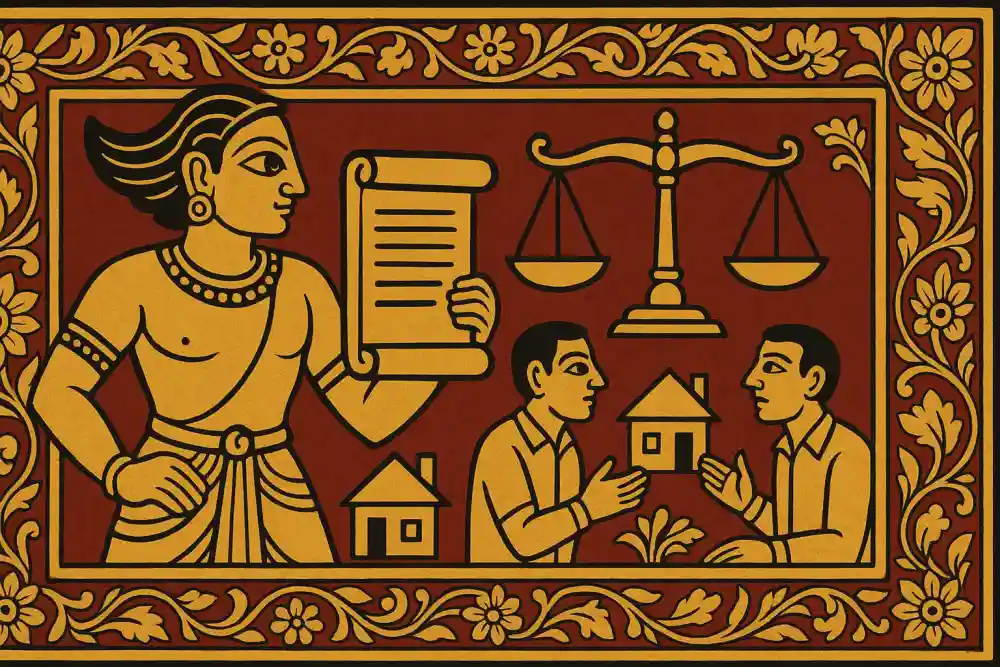
Resolving Property Disputes in Indian Law
Understanding the Foundations of Indian Property Law
Indian property law is a multifaceted system built upon centuries of tradition and influenced by various legal traditions including Hindu law, Muslim law, and British common law. The core of the system revolves around the concept of ‘ownership’ – whether it’s outright ownership, leasehold rights, or other forms of possession. The Indian Constitution establishes fundamental rights related to property, including the right to use, dispose of, and enjoy property. However, the precise application of these rights is determined by the specific laws and regulations enacted by the state and central governments. Historically, ownership was often linked to lineage and feudalism, but modern Indian law emphasizes individual rights and protections.
Key Legal Frameworks Governing Property Disputes
Several key legal frameworks underpin property dispute resolution in India. The Indian Contract Act, 1872, provides the basis for contract law, crucial for determining the validity of agreements related to property. The Transfer of Property Act, 1882, regulates the transfer of property ownership, ensuring a clear and documented process. The Indian Evidence Act, 1872, governs the admissibility of evidence, impacting the investigation and presentation of evidence in property disputes. Furthermore, the High Court of India, which holds jurisdiction over property matters, has significant power to interpret and apply the laws, shaping outcomes. The State Legal Services Act, 2011, further clarifies the roles and responsibilities of state courts in property-related cases.
Dispute Resolution Mechanisms – A Multi-Layered Approach
India offers several mechanisms for resolving property disputes, each with its own advantages and disadvantages. Firstly, negotiation remains a primary method, often employed when amicable solutions are possible. Judicial settlement is frequently the preferred route, especially for complex cases, as it offers a relatively swift and inexpensive resolution. The Mediation process, facilitated by courts or specialized mediation centers, involves parties voluntarily engaging in discussions to reach a mutually agreeable solution. Arbitration, a more formal process, involves a neutral arbitrator or panel to decide the dispute. This offers greater efficiency and confidentiality than litigation. Finally, Litigation – through the courts – is the most adversarial and costly option, typically reserved for cases where other methods fail.
Common Property Dispute Types and Their Resolution
Property disputes manifest in various forms, impacting diverse situations. Boundary disputes, for instance, are extremely common, frequently arising from encroachments or overlapping ownership claims. Right of Way disputes are prevalent, centering around access to property. Land disputes, often rooted in historical claims or conflicting property lines, also constitute a significant area of contention. Tax disputes related to property usage or assessment are another frequently occurring aspect, often contentious due to discrepancies in valuation. The courts typically employ principles of fairness and equitable consideration when determining outcomes.
Recent Developments and Trends in Indian Property Law
Recent amendments and judicial interpretations have shifted the focus toward environmental protection and sustainable land use. The Supreme Court’s landmark rulings on ‘Land Use Patterns’ have emphasized the importance of considering environmental impacts in property transactions. Furthermore, the government’s emphasis on digitization of land records through Aadhaar-based systems is altering the method of property registration and dispute resolution, streamlining processes and improving transparency. The implementation of the ‘Property Rights Act, 2015’ has significantly broadened the definition of ownership and laid the groundwork for a more formalized approach to property security. There’s also a growing trend toward utilizing AI and blockchain technology to enhance land registry processes and simplify property verification.
Challenges and Future Considerations
Despite advancements, property disputes remain a significant challenge in India, particularly in rural areas where access to legal representation is limited. The backlog of cases in the courts, coupled with complex legal processes, frequently leads to protracted delays. Ensuring equitable outcomes requires a greater emphasis on specialized expertise in property law. The increasing digitalization of property transactions offers both opportunities and risks – careful consideration of cybersecurity and data privacy is paramount. Looking ahead, advancements in AI-powered legal research and digital dispute resolution systems have the potential to further streamline the property dispute resolution process, making it more efficient and accessible.