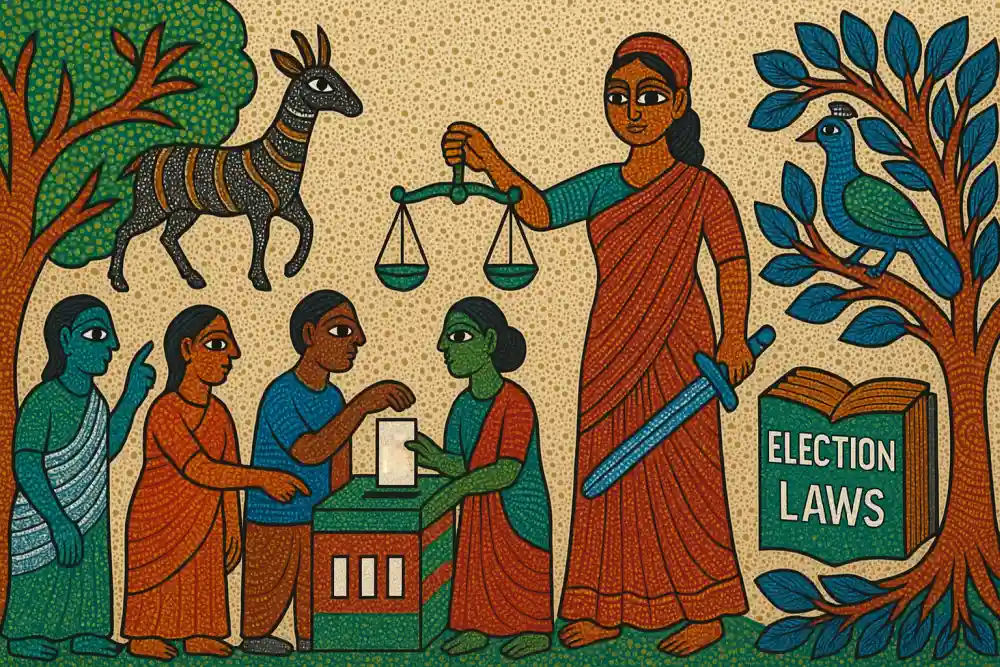
Election Laws and Political Accountability in India
Introduction
India’s democratic heritage is deeply rooted in the concept of periodic elections, and the Indian electoral system is built upon a robust, layered set of laws designed to ensure voter participation, protect the integrity of the process, and establish clear lines of accountability. While the Constitution provides the foundational framework, numerous laws and regulations have shaped the modern electoral landscape. This post will explore the key aspects of these laws, considering their historical context, practical implications, and the ongoing efforts to enhance electoral fairness and transparency. The goal is to provide a clear understanding of how Indian law contributes to the democratic process.
Historical Evolution of Election Laws
The evolution of election laws in India mirrors the country’s journey from a largely colonial system to a parliamentary democracy. Early laws, primarily focused on regulating electoral administration and maintaining order, were established during the British Raj. However, with the granting of independence, the need for a more comprehensive legal framework arose. The 1928 Election Act, often considered a pivotal moment, introduced key principles like the role of the Election Commission and introduced the concept of “ordinaries” – requirements for candidates to secure a minimum number of votes to be eligible for office. Over the decades, subsequent legislation has progressively expanded the scope of electoral law, addressing issues like voter registration, ballot secrecy, campaign finance, and electoral violence. Significant reforms have been implemented, notably with the introduction of the Electoral Offences Act and revisions to the Representation of the People Act (RPA), aiming to streamline the legal processes related to political offenses.
Key Legal Frameworks Governing Elections
Several key legal frameworks govern elections in India, each with distinct responsibilities and powers. The Election Commission of India (ECI) is the primary regulatory body, responsible for administering elections, ensuring compliance with the law, and promoting electoral fairness. The Electoral Laws Act, 2003, establishes the ECI and outlines its powers and responsibilities. The Representation of the People Act, 1951, is a foundational law addressing fundamental rights and the rights of citizens to participate in elections. The Rules and Regulations governing elections are meticulously crafted and updated regularly to reflect evolving legal standards and concerns. The Indian Penal Code, specifically sections related to criminal offenses related to electoral fraud, provides a legal basis for prosecution against those engaging in illicit activities during elections.
Sections of Law and Their Significance
Several specific sections of law are particularly noteworthy. The Conduct of Elections Act, 2016 (CAE) significantly restructured the electoral process, introducing provisions for electoral tribunals, electronic voting, and addressing challenges related to voter disputes. The Electoral Offences Act, 2005, broadens the definition of criminal offenses related to electoral misconduct to include activities like voter impersonation, manipulation of ballots, and disruption of the electoral process. The provisions concerning political finance, as outlined in the Finance Act, 2009, dictate how political parties can raise funds, contributing to transparency and limiting undue influence. The laws concerning electoral violence and obstruction remain central to protecting the integrity of elections and restoring public confidence.
Political Accountability Mechanisms
Beyond the legal framework, India has implemented various mechanisms to promote political accountability. The Freedom of Information Act (FOI Act) grants citizens the right to access government documents, potentially enabling scrutiny of electoral processes and the actions of political parties. The National Assembly and Parliament, through committees and investigations, address concerns regarding corruption, bribery, and malfeasance in the electoral process. The Enforcement Directorate’s role in investigating financial irregularities related to political donations is a significant example of a body focused on ensuring accountability. Furthermore, the National Human Rights Commission (NHRC) plays a role in monitoring and addressing human rights concerns related to elections, including allegations of intimidation or violence.
Recent Developments and Challenges
Recent years have seen evolving attention to electoral reforms, driven by concerns about issues like voter apathy, youth disengagement, and the potential for polarization. The ‘Digital India’ initiative has spurred debates around the use of technology to enhance voter registration and access to information. However, challenges persist. Maintaining voter turnout, particularly among marginalized communities, remains a persistent concern. The increasing use of social media has presented new opportunities for manipulation and disinformation, demanding robust regulatory frameworks. Furthermore, the complexities of cross-state electoral systems – with significant differences in electoral rules and practices – pose challenges to a cohesive and unified electoral process.